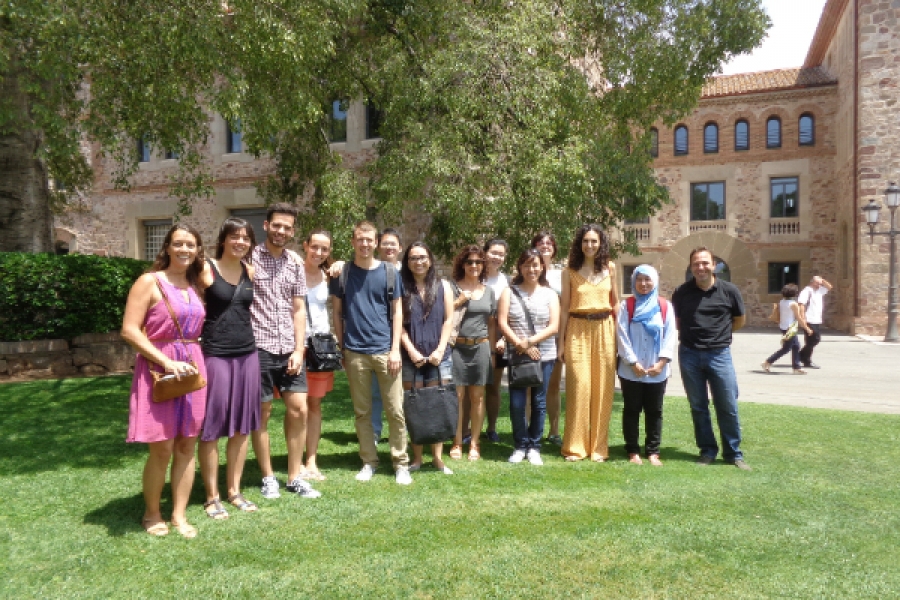
The aim of the workshop was to provide an interdisciplinary forum for the exchange of ideas and the discussion of recent results in the fields of extremophilic microorganisms and their biotechnological applications. Dr. Gabriel was presenting some of the work performed in GENOCOV Group under the title "Role and diversity of microbial cultures in bioreactors for waste gas treatment: biogas desulfurization as a case study".
Extremophilic microorganisms can thrive in physical and geochemical conditions that are detrimental to most current life. There are many classes of such exceptional environmental niches, which range from extremes in pH, temperature, pressure, poor availability of water and nutrients, presence of toxic chemicals and ionizing radiation, etc. Extremophiles have often been associated to prokaryotic evolutionary relicts from the primordial Earth. The study of these organisms has therefore been related to the origin of life on Earth and on other planets (astrobiology). Yet, relatively evolved eukaryotic organisms, such as the black yeasts, have been described among the most extreme-loving life forms. Besides fundamental research, the study of life at the extremes provides a unique opportunity for innovation in a wide range of environmental biotechnology applications, such as in the bioremediation of toxic wastes, and utilization of enzymes that tolerate harsh conditions (extremozymes) for more efficient and sustainable industrial processes.